How to Use a Jeeter Juice Pen

Jeeter Juice pens are disposable THC vape pens, often filled with live resin oil, built for convenience, flavor and potency. These Jeeter Juice carts come pre-charged and pre-filled, so they work straight out of the box for beginners and experienced users alike. Because they use live resin, Jeeter disposables deliver strong flavor and effects with no setup. This guide covers how to use a Jeeter Juice pen for the best vapor, taste and battery life.
What Is a Jeeter Juice Pen and What Comes in the Box?
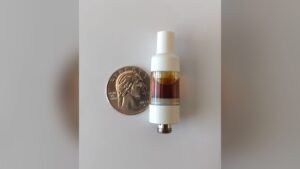
A Jeeter Juice pen (also called a Jeeter Juice disposable cart or “straw”) is an all-in-one vape that combines a battery, a heating element and a cartridge of cannabis oil in one unit. It has a mouthpiece on one end and usually an indicator light and charging port on the other. The key parts are:
- Mouthpiece: Where you draw the vapor. Some devices ship with a small cap on the mouthpiece for freshness; remove it before use.
- Oil Chamber: The clear section that holds the cannabis oil (usually live resin). You can check the oil level through it.
- Battery Section: A built-in battery powers the heating element. Jeeter pens are a closed system: the battery and cartridge are built together and are not meant to be separated.
- Indicator LED: Most Jeeter disposables have a small LED that may light up when you inhale or blink to signal a status such as low battery. Jeeter’s newer all-in-one vapes add a “dark mode” in which the LED stays off while you inhale.
- Charging Port (if applicable): Newer or larger Jeeter Juice disposables, such as the Jeeter 1000 mg disposables, have a micro-USB or USB-C port on the bottom for recharging. Some older 500 mg models could not be recharged and were meant to last only until the oil ran out.
What’s included with a Jeeter pen? The package holds the sealed Jeeter Juice disposable itself, pre-filled with cannabis extract and usually pre-charged and ready to use right out of the box. Most Jeeter disposables do not include a USB cable, even when they are rechargeable, so you may need your own standard cable.
Authentic Jeeter products also carry labeling with batch numbers and lab testing information, a sign of a legitimate, lab-tested product. Check the packaging for a scannable QR code and correct branding, since counterfeits exist (more on that in the safety section).
A Jeeter Juice pen is a draw-activated, button-free vape. It is slim, often shaped like a straw, and easy to carry discreetly. Jeeter uses ceramic coils for smooth hits and runs multiple quality checks on its devices.
How Do You Activate a Jeeter Juice Pen?
Activating a Jeeter Juice pen takes no setup: there are no buttons to press or switches to turn on. Jeeter disposables are draw-activated, so inhaling through the mouthpiece turns the device on and produces vapor. When you puff, the airflow sensor tells the battery to heat the oil, and the indicator light glows while you inhale (unless the pen is in dark mode).
Inhale gently to activate: Place the mouthpiece between your lips and take a slow, steady draw. Vapor should form within a second or two. There is no power button to click; you just inhale. That design makes Jeeter Juice carts easy for first-time vape users.
Are there any exceptions? Virtually all authentic Jeeter Juice disposables are draw-activated. If a product sold as a Jeeter pen has a button, it could be an older model or a fake. Taking a puff activates the heating element, and on most models the LED lights during the draw. On Jeeter’s latest models the LED stays off while you inhale, so a dark light during a hit is normal.
LED Indicators: Many Jeeter pens show a light while you inhale (unless in stealth mode) to show the pen is working. If the LED flashes rapidly or blinks and you get no vapor, there is usually a problem, most often a low battery or another fault (fixes are covered below). Under normal use, inhale = ON and stopping the draw stops the heating. There is no off switch; the pen sits in standby until the next puff.
What’s the Proper Way to Hit a Jeeter Juice Pen?
The right technique to “hit” (inhale from) a Jeeter Juice pen gives a smooth, flavorful draw without wasting oil or irritating your throat. Here is how to hit a Jeeter disposable properly:
- Take Slow, Steady Puffs: Avoid hard, quick drags. Inhale gently for a couple of seconds so the coil heats the oil at the right rate, which gives the best flavor and vapor. Lighter pulls give more flavor and less heat, while very strong pulls give more heat and vapor but less flavor. For a first hit, start with a 1-2 second sip.
- Don’t Overdraw or Overheat: A long rip of 6 seconds or more can overheat the oil and leave a harsh or burnt taste. Jeeter pens heat based on how you inhale, so a hard, long pull runs hotter and can cut flavor. Stick to moderate inhales of about 2-4 seconds, then exhale before drawing again.
- Pace Yourself Between Hits: If you’re new or have a low THC tolerance, wait a minute or two after one puff to gauge the effects before taking another. Jeeter Juice live resin is potent, and inhaled effects come on fast. Start with small doses. Rapid back-to-back hits are harsher on your throat and can overheat the coil or contribute to clogs, so take short breaks between puffs.
- Enjoy the Flavor: Jeeter Juice pens are known for strain-specific flavors and terpenes from the live resin. On the exhale you should taste the strain’s profile. Many users describe the taste of Jeeter’s live resin as “mouthwatering,” and a slow, gentle draw brings out the most flavor.
- Beginner Inhalation Tip: If you’re new to vaping, draw the vapor into your mouth first, then breathe it into your lungs. This “sipping” method helps prevent coughing. The vapor is often milder than smoke but still potent in THC. You can always take another hit, so start with one comfortable puff.
These habits give smooth, flavorful hits and avoid the common mistake of pulling too hard or too fast. Slow, gentle inhales produce the smoothest and most flavorful hits from a Jeeter pen. Take it easy and let the pen do the work: it heats as you inhale, with no special effort needed.
Can You Recharge a Jeeter Juice Pen? How to Charge It Safely
Most Jeeter Juice disposables come pre-charged with enough battery to last through all of the oil. With a half-gram (500 mg) Jeeter pen, you usually won’t need to charge it before it’s empty. Some models, especially the newer 1 gram and 2 gram disposables, are rechargeable, so you can top up the battery if it runs low before the oil is gone. Here’s how to charge a Jeeter Juice pen:
- Check for a Charging Port: Look at the bottom or side of the pen for a small USB port. Many units use micro-USB and some newer ones use USB-C. If there is no port, the pen is not rechargeable and is finished once the battery dies or the oil runs out.
- Use the Right Cable and Power Source: Use a matching USB cable (micro-USB or USB-C) and plug it into a standard 5V USB charger, such as a computer USB port or a basic phone charger brick. Do not use high-voltage “fast chargers”; Jeeter warns that high-voltage chargers may cause the device to malfunction. The cable may not be included, so plan to use your own.
- Charging Indicator Lights: The LED usually shows charging status. Many disposables show a pulsing or red light while charging and a solid or green light when full. Jeeter’s guidelines say a pulsing light while plugged in means charging and a solid light means fully charged. Models vary, so check any included instructions.
- Charging Time: A full charge typically takes about 30-60 minutes for a Jeeter disposable. Unplug the pen once the LED shows full, or after an hour at most.
- Avoid Overcharging: Unplug the pen once it’s charged. Leaving it on the charger for long stretches, such as overnight, can wear down the battery over time. Disposables don’t have advanced battery management, so charge it and then disconnect it.
- Safety Tip: Charge the pen in a dry place away from extreme heat or flammable materials, as you would a phone or any lithium battery device. If the pen gets very hot while charging or the light flashes oddly, which can signal a malfunction, disconnect it.
Do all Jeeter disposables need charging? No. A 500 mg Jeeter Juice Live Resin disposable is usually meant to be used until empty without recharging. These devices come fully charged, with no need to recharge in normal use. The newer Jeeter Juice 1000 mg disposables (1 gram) and the 2 gram versions can be recharged so you can finish every drop of oil. If your pen has a port, you can recharge it. If it doesn’t, it’s one-and-done.
Charging a Jeeter pen is simple: plug it into a USB port with the correct cable and charge until the light shows full. A standard 5V charger (no fast charging) keeps the battery healthy and the hits consistent.
How Can You Tell When Your Jeeter Juice Pen Is Empty?
Unlike a refillable cartridge on a separate battery, a disposable may not tell you it’s done until it stops producing vapor. These signs show that your Jeeter Juice disposable is empty (or nearly empty):
- Visible Oil Level: The simplest check is to look at the oil chamber. If there is no liquid left, or only a thin residue on the walls, the pen is done. Most Jeeter carts have a clear window for exactly this reason.
- Weak or No Vapor Production: An empty or near-empty pen produces very little vapor even when activated. If a puff gives only a thin wisp or no vapor at all, the oil has likely run out and the heating element has nothing left to vaporize.
- Deteriorating or Burnt Flavor: An empty pen often gives a burnt or harsh taste instead of normal flavor, because the wick or coil is dry and starting to burn. If the flavor suddenly turns bitter, smoky or burnt, the oil is gone. Stop using the pen at that point to avoid inhaling burnt wick.
- Blinking Indicator Light: Many disposable vapes, including some Jeeter models, flash the LED at the end of their life. If the LED blinks repeatedly and no vapor comes out, the battery is often out of charge or the device has reached its end. A blinking light can also mean a low battery on a rechargeable unit, so try charging first. If it still blinks after charging, or on a non-rechargeable model, the oil is usually used up.
- Clogged or Hard Draw with Little Output: When a pen is almost empty, the last bit of oil may not flow well, which feels like a clog or tight airflow with very little vapor. Combined with the signs above, it likely means the pen is done. If you can still see oil but it won’t hit, it may be a clog or a dead battery instead (see the fixes below).

Your vape is empty when you can see no more oil, it struggles to produce vapor, and the taste turns bad. All three together are a clear signal to stop and dispose of the pen responsibly. Puffing on an empty pen only burns the wick, and the smoke it makes is unpleasant and not healthy to inhale.
Tip: If the pen stops hitting while you still see a fair amount of oil in the chamber, the problem is probably a battery issue or a clog, not an empty pen. Warm the pen gently in your hands or a warm room and see whether the oil starts moving. Warming helps thick, stuck oil flow again (see the fixes in the next section). If the chamber looks empty and the device won’t hit, it’s time for a new Jeeter Juice cart.
How Can You Fix Common Jeeter Juice Pen Issues?
Jeeter Juice pens are usually trouble-free, but users occasionally run into clogging, weak hits, or a pen that won’t hit at all. Here’s how to troubleshoot each one:
1. Clogged or Difficult Draw: Over time or in cold conditions, thick cannabis oil can harden and block the airflow path. If you pull and little or nothing comes out and the draw feels blocked, you probably have a clog. To fix it:
- Warm the Pen: Rub the pen between your hands for a couple of minutes or keep it somewhere warm (not hot). One Reddit user said that tucking the Jeeter “straw” under an arm for a short time helped “preheat” the pen and get it pulling through every time. Warmth makes the oil thinner so it can flow.
- Gentle Airflow Clearing: Take a few gentle pulls, or blow softly into the mouthpiece or the bottom air vent. One Jeeter owner found that blowing into the bottom end (where the charge port is) cleared the problem and got the pen working again. This can dislodge oil from the airflow sensor or clear condensation. Don’t blow so hard that oil leaks; a firm puff of air is enough to push out a blockage.
- Check the Mouthpiece: Look for debris or hardened resin at the mouthpiece. Clear an obvious blockage carefully with a toothpick or pin, taking care not to damage anything.
- Store Upright: To prevent clogs, keep the pen upright (mouthpiece up) when not in use so oil doesn’t seep into the airway.
2. Pen Not Hitting at All (No Vapor): If your Jeeter pen won’t fire at all, with no light and no vapor, try these steps:
- Battery Check: On a rechargeable model, the battery may be dead. Charge it for 30-60 minutes and try again. A fully drained battery often blinks when you try to hit it, which means it needs a charge.
- Airflow Sensor Issue: If the light comes on but no vapor comes out, it may still be a clog (see above) or a misaligned airflow sensor. Some users have fixed unresponsive pens by removing the bottom cap and adjusting the sensor, but this isn’t recommended because it’s easy to damage the device. Try the blowing method first; one Reddit user reported, “I blew into it for about 10 seconds… it worked.”
- Defective Unit: If charging and clearing don’t help and you bought the pen from a licensed retailer, you may have a rare defective unit. Contact the dispensary or manufacturer. Authentic Jeeter products go through multiple quality checks, so defects are uncommon, but they happen.
3. Weak Hits or Low Vapor Production: If the pen works but the hits feel weaker than expected:
- Battery Low: A low battery produces weaker vapor. If vapor has dropped off and the light is blinking, recharge the pen and see whether it improves.
- Oil Cold or Thick: Cold weather thickens the oil and gives lighter hits. Warm the pen slightly as described above, and the oil should vaporize more easily and give fuller hits.
- Avoid Chain Vaping: Many puffs in quick succession can overheat the coil and thin out the vapor. Leave a few moments between draws so the wick can soak and the device can recover. Spacing out your hits also prevents overheating and protects the quality of the oil.
- Clean the Contacts: If your device has a removable part, such as a removable mouthpiece, or an obvious airflow inlet, make sure no dirt is blocking the contacts or openings. A quick wipe with a cotton swab can help.
Simple troubleshooting usually gets a Jeeter working again. Warming the cartridge to clear a clog or giving it a short charge solves most problems. One Reddit user reported that their Jeeter had no airflow and no smoke, but “blowing the bottom end where you’re supposed to charge it” brought it back to life, which suggests the airflow sensor was stuck.
Safety note: Never take apart a disposable that isn’t meant to be opened, and never heat the cartridge with a flame such as a lighter; you risk damaging it or injuring yourself. If the pen still won’t hit after the steps above and you bought it from a reputable source, ask about a return. In most cases, though, a clogged or low-battery Jeeter can be revived, letting you finish the rest of your cart without issues.
What Are the Best Dosage and Inhalation Tips for Jeeter Juice Pens?
Dosing with a Jeeter Juice pen is straightforward, but potency matters. Jeeter Juice disposables contain concentrated THC oil (often live resin or liquid diamonds), so a little goes a long way. Here’s how to manage your dose:
- Start Small, Especially for Beginners: If you’re new to Jeeter or to THC vapes, take one short puff (1-2 seconds) and wait a few minutes to feel the effects. Vaporization delivers a potent dose quickly. A small first hit lets you gauge your tolerance; you can always take another puff, but you can’t undo a big one.
- Understand the Fast Onset: Edibles can take an hour or more, but inhaled THC from a Jeeter pen can be felt within a few minutes. Effects may peak 5-10 minutes after a puff and can last an hour or two, depending on the person and the strain. Because the onset is quick, you can dose step by step: one puff, pause, assess, then continue if needed. This helps you avoid an uncomfortable high.
- Puff Duration and Intensity: How much vapor (and THC) you get depends on how long and hard you inhale. A light 2-second sip may deliver a few milligrams of THC, while a big 5-second draw can deliver much more. Jeeter’s design adjusts vapor output to pull intensity: “the stronger/longer the puff, the more the heating and vapor (but less flavor), and the lighter the puff, the more flavor (and slightly less vapor).” Moderate draws are usually enough for a full hit. Some vapes cut off automatically at around 8 seconds, but there’s no reason to max that out.
- Know Your Tolerance: Experienced users may need a couple of hits to reach the effect they want, while novices may be fine with half of a small puff. Jeeter Juice live resin can be very high in THC, and liquid diamond formulas are marketed as especially potent. Potency varies by product, so check the label or lab results and expect a strong product. With a high tolerance you can take longer or extra draws, but pause between them so you don’t go from zero to “too high.”
- Steady Breathing: Inhale steadily. You don’t need to hold the vapor in for long; a second or two is plenty before exhaling. Holding hits longer doesn’t meaningfully increase absorption and can make you lightheaded. Inhale, hold briefly, then exhale normally.
- Count Your Puffs (Optional): Some people track their hits to moderate intake, for example by settling on “two puffs” per session. A 0.5g Jeeter disposable typically delivers 300-500 puffs on average, depending on puff length; short sips yield more total puffs than long draws. If a half-gram gives about 400 puffs, then 4 puffs use roughly 1% of the pen.
- Listen to Your Body: Dosage guides are estimates, and the right amount is personal. If you feel good after one or two hits, stop there. If you feel little and are comfortable, another puff is fine. Go gradually.
Responsible dosing means starting conservatively and increasing only if needed. With Jeeter’s potent live resin, many users find a little is enough. In one cannabis community discussion, users who just wanted a light high and fruity flavor said a couple of puffs was plenty, while heavy users with high tolerance wanted more hits. Know where you fall on that range and dose accordingly.
How Should You Store a Jeeter Juice Pen Properly?
Proper storage of your Jeeter Juice disposable protects the oil and keeps the pen working until the last puff. Between uses:
- Keep It Upright: Store the pen vertically with the mouthpiece up whenever possible. This stops oil from pooling at the mouthpiece or leaking, and makes clogs less likely because less oil settles in the airway.
- Cool, Dark Place: Treat the pen like any cannabis product and keep it out of direct sunlight and heat. High temperatures can make the oil runny, which can lead to leaks or degradation, and extreme heat also stresses the battery. Don’t leave it in a hot car or on a windowsill. A cool, dry drawer or cupboard is ideal. Room temperature or slightly below is best; refrigeration isn’t needed and can make the oil too thick.
- Avoid Extreme Cold: Very cold temperatures thicken the oil dramatically, which can cause clogs or poor vapor until it warms up. Don’t store the pen in freezing conditions. If it gets very cold, for example left in a car overnight in winter, let it warm to room temperature before using it.
- Protect from Physical Damage: Avoid dropping or crushing the pen. The internal hardware and the glass or plastic oil chamber can crack if handled roughly. On the go, keep it in a small case or the original box, especially in a bag or pocket with keys.
- No Prolonged Sunlight: UV light breaks down cannabinoids and terpenes over time, so dark storage preserves the potency and flavor of the live resin. Sunlight also heats the pen, for example behind a car window.
- Short-Term vs Long-Term: If you won’t use the pen for several weeks, leave a rechargeable model about half charged, since lithium batteries store best at a moderate charge. Most people finish a Jeeter disposable fairly quickly once it’s opened. The oil is freshest when used within a few months, so don’t stockpile pens for too long.
These habits help prevent leaks, clogs and potency loss. Jeeter Juice pens are durable and come in child-resistant packaging, but they still last longer with a little care. Store your Jeeter in a cool, upright, secure spot when not in use, and it will deliver a smooth hit the next time you pick it up.
What Safety and Legal Guidelines Should You Follow?
Using a Jeeter Juice pen responsibly also means following safety rules and the law. Keep these safety and legal considerations in mind:
Age and Legality: Jeeter Juice pens contain THC, so they are legal only for adults of the required age: 21+ in most recreational states, or 18+ with a medical card in some medical markets. Confirm that cannabis is legal where you are before buying or using a Jeeter disposable. In the United States, cannabis laws vary by state. Jeeter is a licensed brand sold in adult-use states such as California, Arizona, Michigan and Massachusetts, and it expands to new markets as laws permit. Buying or using Jeeter products is illegal in states where cannabis is prohibited.
Do Not Drive or Operate Machinery: THC can impair coordination and judgment. Never drive or operate heavy machinery after using a Jeeter Juice pen; wait until you are fully sober. Cannabis can cause drowsiness and slower reaction times, which makes driving dangerous and illegal under DUI laws.
Public Use and Etiquette: Even in legal states, vaping cannabis in public is often unlawful. Use your Jeeter pen in private or in designated areas where it’s allowed. The vapor has a noticeable smell, though weaker than smoke. Be considerate of people around you, especially in shared housing and public spaces, and follow local rules on where cannabis use is permitted.
Travel Caution: Can you travel with a Jeeter Juice pen? Flying or crossing state lines with cannabis is generally illegal. Marijuana and THC vapes remain illegal under U.S. federal law, so taking a Jeeter pen through airport security or across state borders can get you into legal trouble. The TSA treats THC products as illegal to carry on planes, even though its screeners don’t actively search for them. Some travelers have carried vape pens in carry-on bags the way they would a nicotine vape (e-cig devices are allowed in carry-on, not checked luggage), but this is not legally sanctioned.
If a TSA agent finds a THC cart, they can involve law enforcement. International travel with any cannabis product is out of the question. The safest rule: do not travel between jurisdictions with a Jeeter pen. Driving between two legal states still means crossing state lines, which is federally illegal. When in doubt, leave it at home.
Health Safety: Use only authentic, lab-tested Jeeter products. Counterfeit and black-market vape cartridges have caused serious health problems, including the 2019 vape lung crisis. Real Jeeter pens are tested for purity and made with clean cannabis oil. Fakes can contain dangerous additives such as pesticides or vitamin E acetate, which can cause lung damage and other severe problems. Authenticity is covered next; for safety, buy Jeeter only from licensed dispensaries.
Avoid Mixing with Other Substances: Alcohol or other drugs used alongside your Jeeter pen can increase impairment. Combined, cannabis and other substances can leave you more intoxicated than you expect, so be cautious.
Keep Away from Children and Pets: The fruity flavors and pen-like shape of a Jeeter can attract children and pets. Store it out of their reach; swallowing the oil or chewing the cartridge could be very dangerous. Jeeter products come in child-resistant packaging, so put the pen back in it and close it when minors are around.
Authenticity and Purchasing: Because Jeeter is a popular brand, counterfeit “Jeeter Juice” carts circulate in unregulated markets. To stay safe and legal:
- Buy from Licensed Retailers: Stick to state-licensed dispensaries or delivery services, and if you buy online, make sure the seller is authorized. Avoid social media sellers, unlicensed smoke shops and street dealers. Never buy Jeeter products from Craigslist, Facebook Marketplace or other unlicensed sellers.
- Check Packaging and QR Codes: Authentic Jeeter disposables have a scannable QR code on the box that links to an official verification or lab results page. Scan it with your phone. If it doesn’t scan, or it leads to a sketchy site or nowhere, treat that as a red flag. Real Jeeter packaging is well printed, with correct logos and no typos. Fakes often have misprints or misspelled strain names, such as “Jeeter Juce,” or off-color logos.
- Half-gram vs Full-gram: Jeeter Juice live resin disposables were originally sold only as half-gram (500 mg) units, so a “1g Jeeter” seen a couple of years ago was likely fake. Jeeter has since introduced legitimate 1 gram disposables in some product lines. If you come across a Jeeter 1000mg disposable, make sure it’s from a licensed shop and carries the proper authenticity markings, since fakes targeted that demand early. When in doubt, verify on Jeeter’s official website or ask the dispensary.
- Why it Matters: Fake carts can be dangerous, not only a waste of money. Counterfeit Jeeters may contain untested oil with harmful chemicals. Real Jeeter pens sold in licensed stores have passed strict safety testing. Your health is at stake, so don’t take chances with unknown sources.
Legal and safety basics: Be of legal age, stay within legal jurisdictions, don’t drive under the influence, keep the pen away from minors, and make sure the product is authentic. Following these rules keeps your use of Jeeter Juice both legal and safe.
How Do Jeeter Juice Pens Compare to Other THC Vape Products?
Jeeter Juice disposables hold a strong position in the cannabis vape market. Here’s how they compare with common alternatives on design, convenience, potency and experience:
Disposable vs Cartridge Systems: Jeeter Juice pens are all-in-one disposables: the oil and battery come together, and you discard the whole unit when it’s empty. The classic alternative is a 510-thread cartridge + battery system, where you screw a cartridge onto a separate reusable battery. Jeeter’s advantage is simplicity and zero maintenance, with no separate battery to buy and no compatibility to worry about.
You inhale and it works, with no settings to adjust. With a 510 cart, you have to keep the battery charged and sometimes adjust voltage, and cartridges can leak or connect poorly. Jeeter avoids those problems with a closed system built for its own oil.
No Buttons, No Adjustments: Many vape batteries have buttons and variable voltage. Jeeter pens have no buttons at all; you just inhale, and the pen regulates power based on your pull. That suits users who don’t want to tinker. Vape enthusiasts who like to dial in voltage can’t do that on a Jeeter disposable, which needs “no adjustments, refills, or coil changes.” That convenience is a major selling point.
Live Resin Potency and Flavor: Jeeter Juice uses live resin and other high-end extracts such as liquid diamonds, while many standard carts, especially cheaper ones, use THC distillate with added terpenes. Live resin usually keeps more terpenes and minor cannabinoids, which gives a richer flavor and a fuller “entourage effect” high, and many experienced consumers prefer it for that reason. Jeeter’s live resin disposables are often praised for hits that taste like the actual strain. Competing products such as Stiiizy pods, PlugPlay pods and 510 carts from brands like Raw Garden also use live resin or live rosin, and Jeeter is comparable to them in quality. However, some experienced users on forums have found Jeeter’s effects milder than other top-shelf live resin brands.
One Reddit reviewer wrote that Jeeter Juice disposables “taste really good” but did “literally nothing” for anyone with more than a baby tolerance. Another user in the same thread disagreed: “Works for me. I think they taste all right and I just like to cop a buzz… I’m not an aficionado.” Jeeter pens deliver on flavor, but some heavy consumers rate their strength below other concentrate products.
Hardware and Performance: Jeeter’s hardware is tuned to its oil’s viscosity, with a ceramic coil and intake holes sized for live resin. Many generic carts now use ceramic coils too, but Jeeter says it has optimized airflow and coil resistance (its TerpReserve™ tech in newer AIO vapes) to prevent clogs and preserve terpene flavor. In practice, Jeeter pens produce big clouds for a disposable, on par with good cartridge setups.
Other disposables or carts may hit harder or softer depending on their voltage. With Jeeter’s draw-activated system, you can ease off your inhale to control vapor, while button-fire products deliver the same strong hit until you let go. Neither is better; it comes down to how much control you want.
Size and Discretion: Jeeter disposables are small, slim and discreet. They can pass for an e-cig or go unnoticed in your hand, especially with the “dark mode” LED on newer models (no light while inhaling). Traditional 510 batteries range from pen-sized to larger box mods. Jeeter’s pens carry colorful branded designs, while 510 carts show the oil and attach to a separate battery that may be plain or styled. If you like a slim, integrated look, Jeeter has the edge.
Cost and Value: Jeeter Juice disposables are priced at a premium, partly because of the live resin and the convenience. They may cost more per gram than basic distillate carts, and other high-end brands such as Raw Garden and 710 Labs price their live resin carts similarly or higher. Fans say the quality, testing and flavor justify the price.
With disposables, you pay for a battery every time, which some people see as wasteful. With a reusable battery and cart system, you buy only the oil cartridge. If you vape a lot, 510 carts may be cheaper over time. For many people, the ease of a disposable is worth the extra cost, and Jeeter’s half-gram size lowers the price of trying one.
Other Product Types: Some users compare Jeeter Juice pens to dab pens or portable dab rigs for wax concentrates. Those are a different category: you load your own concentrate, and they usually hit much harder but are far less convenient for casual use. Jeeter targets mainstream consumers who want a ready-to-use, flavorful product with no hassle.
Jeeter Juice pens offer top-tier extract quality in a very convenient format. Compared with standard carts, they win on ease of use and flavor and give up some customization. Compared with other disposables, Jeeter is often seen as a higher-quality, more reliable choice, as long as you have a real one. For a casual user who values taste and simplicity, Jeeter pens are a strong pick; a connoisseur chasing the strongest effect or more control may prefer a specialized cartridge or rig.
Jeeter has a strong reputation for quality, safety and consistency, which makes it a trustworthy option among THC vapes.
FAQs About Using a Jeeter Juice Pen
Q1: Do Jeeter Juice pens come charged?
A: Yes. Authentic Jeeter Juice disposable carts come fully charged and ready to use straight out of the box, so you don’t need to charge a new pen before the first use. On the half-gram disposables, the battery is usually sized to last through the whole cartridge without recharging.
Open the package and inhale to activate. (Larger 1g or 2g rechargeable Jeeter models also arrive with some charge; for long sessions you may want to top them off after some use. Most users can start using any Jeeter pen straight out of the package.)
Q2: Can you refill a Jeeter Juice pen?
A: No. Jeeter Juice pens are not meant to be refilled. They are disposable devices, used until the oil runs out. Once empty, discard the pen safely; don’t open or refill it. The closed-system design means the cartridge section isn’t meant to be detached, and prying it open can break the pen or contaminate the oil.
If you want a reusable setup, choose a different product, such as a 510-thread refillable cartridge system. When a Jeeter is finished, dispose of it properly under electronics waste guidelines and buy a new one.
Q3: What if my Jeeter pen’s light blinks and it isn’t hitting?
A: A blinking light on a Jeeter disposable usually means a low battery or power issue. If the pen blinks when you inhale and gives no vapor, charge it first if it’s rechargeable; blinking while unplugged often means the battery is dying. Charge it for 30-60 minutes and try again. If it’s non-rechargeable, or it still blinks after a full charge, there may be a connection issue or malfunction. Some devices also blink when they are empty. In short, blinking means something is stopping the pen from working normally. Try the following:
- If rechargeable: recharge it fully (a solid light while plugged in means a full charge).
- Make sure the contacts and airflow are clear (see the clog fixes above), since a blockage can also trigger a fault signal.
- If it keeps blinking after these steps and produces no vapor, the pen has likely reached its end, either empty or faulty. If the oil is gone, dispose of it. If oil remains but the blinking won’t stop, it may be defective, so contact the retailer. In most cases, though, a blinking Jeeter just needs a quick charge.
Q4: How long should a Jeeter disposable last (how many hits)?
A: It depends on the pen’s size and your habits. A 500 mg (0.5g) Jeeter Juice disposable gives roughly 300 to 500 puffs in total. At about 50 puffs a day, a half-gram lasts around a week, faster or slower depending on how often and how hard you inhale. A 1g (1000 mg) Jeeter disposable lasts roughly twice as long, potentially in the 600-1000 puff range, though many factors affect this.
Longer, deeper pulls use more oil per hit than quick, light puffs, so someone taking big rips gets fewer total hits than someone taking small sips. With moderate use, a 500 mg Jeeter can last several days to a week. To make your Jeeter pen last:
- Take only what you need per session; don’t chain-hit if one puff is enough.
- Store it properly to avoid waste from leaks or evaporation.
- Factor in the potency: you may need fewer hits than with a weaker vape, and many users find Jeeter strong enough for shorter sessions.
Q5: Can I travel with a Jeeter Juice pen?
A: Traveling with a Jeeter pen is often not legal, depending on where you go. For air travel, the answer is no: you shouldn’t carry cannabis products on a plane. Federal law treats marijuana, including THC vapes, as illegal to transport, and the TSA follows federal law. Some flyers have carried vape pens in carry-on bags without incident, since TSA focuses on security threats and vapes look like e-cigs, but this is at your own risk and not legally permitted.
TSA agents don’t actively search for drugs, but if they find a vape and identify it as containing THC, they can refer the matter to local law enforcement. Bottom line: leave your Jeeter at home when flying.
For car travel within one state or between two legal-cannabis states, there’s no TSA involved, but crossing state lines with cannabis is still federally illegal, and you must follow each state’s possession limits. If you travel by car, keep the pen in its packaging in the trunk or a sealed container (some states require cannabis to be out of reach while driving).
Never use it while driving, or you risk DUI charges. Never take it into places where cannabis is illegal; driving from Colorado into a prohibition state with a Jeeter in your pocket, for example, could bring serious penalties.
For international travel, the answer is an absolute no. Countries enforce strict drug import and export laws, and being caught with a THC vape at customs can be extremely serious.
Traveling with a Jeeter Juice pen is straightforward only if you stay within the legal area where you bought it. As an electronic device with a lithium battery, the pen itself belongs in carry-on luggage; airline rules require all vapes to go in carry-on, not checked baggage. The contents are the legal problem. If you fly domestically with one anyway, understand the risk and never use it on the plane; vaping on airplanes is illegal, and vaping cannabis even more so.
Many users don’t take the risk. If recreational use is legal at your destination, consider buying a new disposable there instead of carrying yours. Put the law and your safety ahead of convenience.
Final Thoughts: Getting the Best Experience with Jeeter Juice
A Jeeter Juice pen is a convenient, efficient way to use cannabis concentrates. To get the best experience, follow the key steps: make sure you have a genuine Jeeter product, activate it by inhaling, take slow puffs, and store and handle it responsibly. Jeeter designs these disposables to be easy to use, so you don’t need to be an expert. Follow the inhalation and care tips above and you’ll get smooth, potent vapor with strain-specific flavor.
Keep your Jeeter pen cool and upright, and troubleshoot gently, with a little warming or a charge, if something isn’t right. Those habits help you finish every drop of the live resin oil without problems. When it’s done, dispose of the pen properly; many areas have electronic waste drop-offs for batteries and devices, which is better for the environment than the trash can.
Consume responsibly and legally: use your Jeeter Juice in moderation, in the right setting, with respect for the people around you and local laws. If you’re unsure about anything, whether an effect feels too strong or you have a question about the device, ask a knowledgeable friend or a budtender, or check reliable online resources.
Jeeter has become a popular cannabis brand on the strength of its quality and consistency. With this guide, you have what you need to use a Jeeter Juice pen well. When you’re ready to buy more, buy from licensed dispensaries or official Jeeter channels to guarantee authenticity, so every Jeeter Juice cart you use is safe and potent.
Important: This guide is for informational purposes only and is not medical or legal advice. THC products are for adults 21+ only, and cannabis laws vary by state, so check the rules where you live before buying or using any vape product.