Live Rosin vs Live Resin: What Solventless Extraction Changes, and What the Research Shows
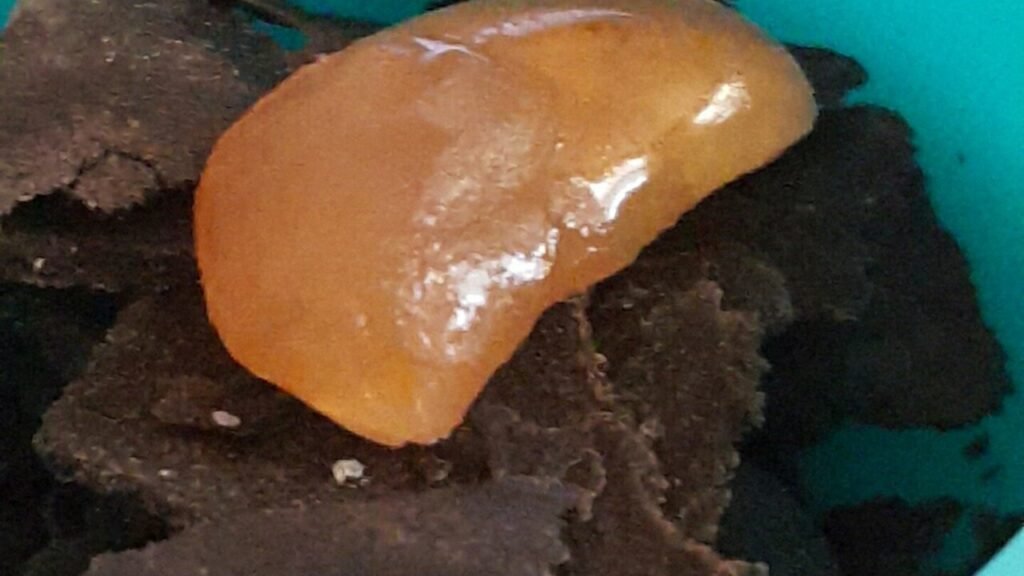
The live rosin vs live resin question comes down to one step. Both start with cannabis that was frozen the day it was harvested. The difference is what pulls the oil out of the plant. Live resin is made with a hydrocarbon solvent such as butane or propane. Live rosin is made with ice water, mesh bags, gentle heat and pressure, and nothing else.
That one change affects flavor, yield, price, lab testing and even how the oil behaves inside a vape. This guide explains how each extract is made, what published research does and does not say about them, and how the federal hemp definition change scheduled for December 2026 applies to THCA rosin products.
Important: This article is for general information only. It is not legal or medical advice. Cannabis products are for adults 21 and over, and their legality depends on your state, so check local law before buying. Cannabis products have not been evaluated by the FDA and are not intended to diagnose, treat, cure or prevent any disease.
Key Takeaways
- Same plant, different extraction: both use fresh-frozen cannabis; live resin uses a hydrocarbon solvent, live rosin uses ice water and a heat press.
- Solvent testing: California sets a residual limit of 5,000 µg/g for butane and propane in finished products, per 4 CCR § 15718. Rosin has no solvent to remove in the first place.
- Heat is the bigger safety variable: a 2017 Portland State study in ACS Omega found terpenes break down into benzene and methacrolein at high temperatures, whatever extract they came from.
- The research gap: we could not find a peer-reviewed study comparing the terpene profiles of rosin and hydrocarbon extracts head to head, as of October 2026.
- Hemp rules are changing: a 2025 federal law redefines hemp by total THC, including THCA, with most provisions now delayed to December 11, 2026.
Why “Live” Matters: Fresh-Frozen Plants and Terpenes
“Live” refers to the starting material, not the extraction method. Instead of drying and curing the harvest for weeks, the producer freezes whole plants or fresh flowers right after cutting. The goal is to keep the terpenes, the aromatic compounds behind a strain’s smell and flavor, from evaporating during the dry and cure.
Terpenes are volatile. Myrcene, one of the most common cannabis terpenes, boils at roughly 167°C (333°F), and limonene at about 176°C (349°F), well below the temperatures many vape coils and dab nails reach. Drying flower at room temperature for several weeks loses a share of them before extraction even starts.
The idea of extracting from frozen plants took hold in Colorado. High Times credits hashmaker William “Kind Bill” Fenger with the 2013 breakthrough of making butane hash oil from freshly harvested, frozen whole plants. That product became known as live resin. Live rosin applied the same fresh-frozen idea to solventless hash a few years later.
How Live Resin Is Made
Live resin is a hydrocarbon extract. Frozen plant material is packed into a closed-loop system, and chilled liquid butane, propane or a blend of the two is washed through it. The solvent dissolves cannabinoids and terpenes off the plant, then gets recovered, leaving behind a crude oil.
That oil still holds traces of solvent, so it goes through a purge, typically in a vacuum oven with low heat, until the remaining solvent is below the legal limit. Producers can then shape the texture: whipping it into badder, letting THCA crystallize into “diamonds” sitting in a terpene-rich sauce, or filling it into cartridges.
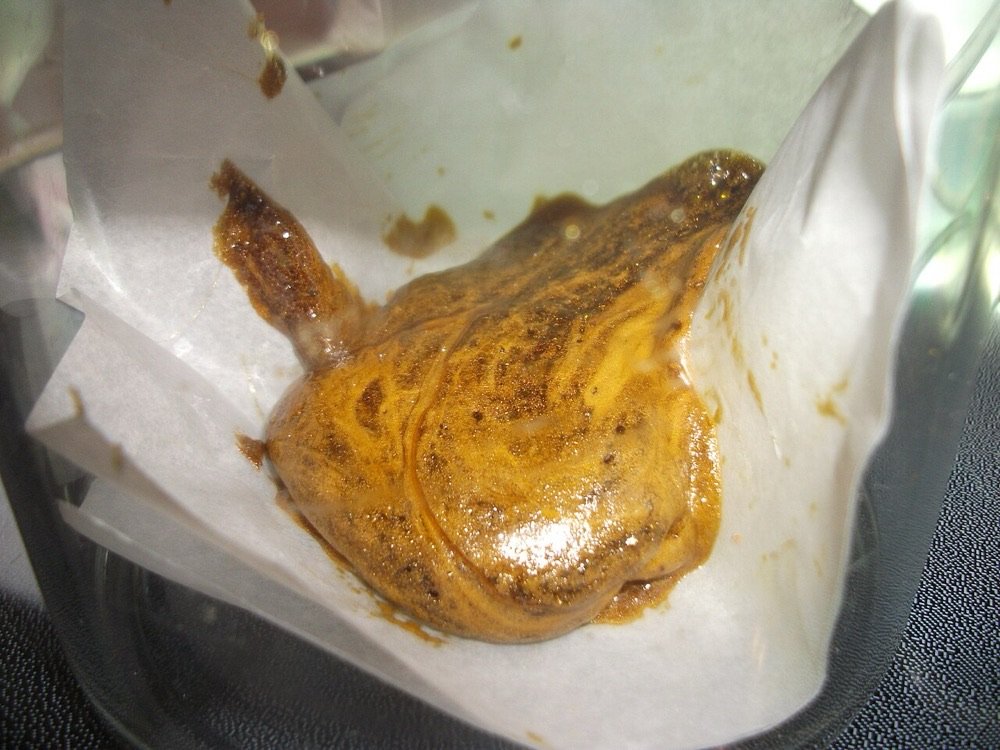
Regulators treat residual solvent as a testing issue, not a ban. In California, the Department of Cannabis Control’s testing rule, 4 CCR § 15718, places butane and propane in its “Category II” group with an action level of 5,000 µg/g (5,000 parts per million) in a finished product. Category I solvents such as benzene are held to 1 µg/g. A compliant live resin has passed that test; many lab reports show butane and propane as not detected at all.
The trade-off is efficiency. Hydrocarbon extraction recovers far more oil per pound of plant than ice water washing does, which is a large part of why live resin is cheaper than live rosin on most shelves.
How Live Rosin Is Made
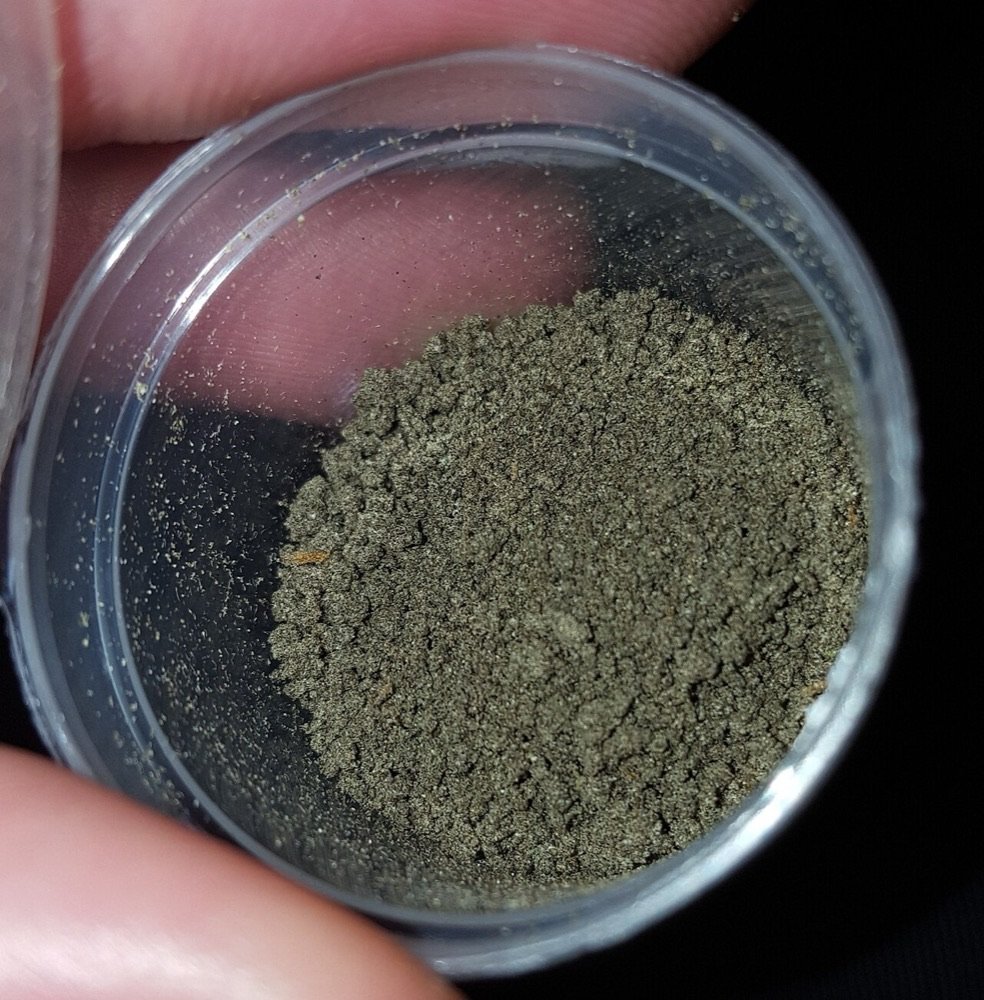
Live rosin is a solventless extract, and it is made in two stages. First the producer makes ice water hash. Then the hash is pressed into rosin.
- Wash: fresh-frozen flowers go into a vessel of ice and cold water and are gently agitated. The cold makes the trichome heads brittle, so they snap off the plant.
- Filter: the water is drained through a stack of mesh bags with progressively smaller holes, measured in microns. Each bag catches a different size of trichome head, and the cleanest grades are often sold as “full melt.”
- Dry: the wet hash is freeze-dried or cold-dried to remove the water without heat.
- Press: the dried hash is wrapped in a fine filter bag and squeezed between two heated plates. The oil that flows out is hash rosin, and because it started from fresh-frozen plants it is called live rosin.
- Cure (optional): many producers jar the fresh rosin and let it rest at cool temperatures. This “cold cure” turns it into a whipped, buttery texture known as rosin badder, while warmer curing can produce a jam or separate THCA crystals sold as rosin diamonds.
Pressing itself is older than the commercial category. Cannabis Business Times reports that in 2014 Phil “SoilGrown” Salazar squeezed a cannabis bud with a hair straightener and posted the oil that came out, the moment usually cited as the start of the rosin boom. Purpose-built rosin presses followed within a year.
The process has no chemistry beyond water, cold, heat and pressure. That is the appeal, and also the cost: only the trichome heads that survive the wash end up in the jar, so yields are low, and the result depends heavily on growing strains that wash well. Some brands now grow specifically for solventless. Turn, for example, says it selects strains for ice water extraction and uses only water, ice and agitation.
Live Rosin vs Live Resin at a Glance
| Live resin | Live rosin | |
|---|---|---|
| Starting material | Fresh-frozen plant | Fresh-frozen plant |
| What separates the oil | Butane, propane or a blend | Ice water, mesh bags, heat and pressure |
| Post-extraction step | Vacuum purge to remove solvent | Freeze-drying, then pressing |
| Residual solvent test | Required; must be under state action levels | Still tested, but no solvent is introduced |
| Yield per pound of plant | Higher | Lower |
| Typical price | Mid to premium | Premium, usually the top of a brand’s range |
| Common forms | Sauce, diamonds, badder, carts | Badder, jam, cold cure, carts and pods |
Neither column makes one extract “clean” and the other “dirty.” Both can be made well or badly. Rosin’s selling point is that nothing foreign goes into the process; live resin’s is that it captures a broader range of plant compounds at a lower cost. Flavor preference is personal, and plenty of experienced consumers keep both around.
What the Research Says
Most claims about rosin versus resin come from brands and retailers rather than laboratories. The published science is narrower than the marketing, but a few findings matter for anyone choosing between them.
Heat breaks terpenes down into harmful compounds
In 2017, Portland State University chemists Jiries Meehan-Atrash, Wentai Luo and Robert Strongin published “Toxicant Formation in Dabbing: The Terpene Story” in ACS Omega. They heated common cannabis terpenes, including myrcene, limonene and linalool, under conditions that simulate dabbing.
The team detected methacrolein and benzene forming as terpenes degraded, with levels rising as temperature rose. No methacrolein was detected at 322°C (612°F), but it appeared in amounts from tens to hundreds of nanograms at 403°C (757°F) and above. The authors did not measure health outcomes in people.
The study did not compare extract types, and that is the point. A terpene-rich extract, whether rosin or resin, is exposed to the same chemistry once it is overheated. For vape users, temperature control and hardware quality matter at least as much as the extraction method on the label.
What went into the cartridge mattered more than how it was extracted
The largest vaping health event in the U.S. was not about extraction at all. By February 18, 2020, the Centers for Disease Control and Prevention had recorded 2,807 hospitalized cases or deaths from e-cigarette or vaping product use associated lung injury (EVALI), including 68 deaths. The CDC identified vitamin E acetate, an additive used to thin or bulk out THC oil, as a primary cause, and linked most cases to THC vapes obtained from informal sources.
That history is why the ingredient list and the lab report matter more than the word “live.” A cartridge sold as 100 percent rosin should contain only rosin. If a batch report shows anything else, or no batch report exists, that tells you more than the packaging does. We covered why packaging alone cannot prove authenticity in our guide to spotting fake carts.
The head-to-head study does not exist yet
Brand blogs often state that rosin “keeps more terpenes” than hydrocarbon extracts. We looked for peer-reviewed data comparing the two directly, using gas chromatography on matched starting material, and did not find any as of October 2026. The mechanism is plausible, since rosin skips the solvent purge, but hydrocarbon extraction also pulls some compounds that a water wash leaves behind. Until a controlled comparison is published, the honest answer is that the two extracts capture different terpene fractions, and neither has been proven superior.
Vaping Live Rosin: Why the Hardware Is Different
Rosin is thicker than most distillate and many live resin sauces. It has no added cutting agents to thin it, and it can contain plant waxes and lipids that survive the press. In a standard cartridge built for runnier oil, thick rosin can wick slowly, scorch on the coil or clog the airway.
Brands that sell rosin vapes usually adjust the hardware to match. Turn’s solventless live rosin pod system is one example of the approach: the pods use heating tuned for oils of different thickness, there are no buttons or voltage settings to get wrong, and the battery recharges inside a pocket-sized USB-C case. Sealed pods also avoid some of the leaking problems open cartridges have with thick oil.
A few habits help any rosin vape perform better:
- Store it upright and cool: heat thins the oil and can push it into the airway.
- Take slower, shorter draws: long pulls on thick oil are the quickest way to a burnt taste.
- Expect some darkening: rosin oxidizes over time, which can change its color slightly without meaning the oil has gone bad.
- Keep it away from the dashboard: a car in summer can exceed the temperatures that start breaking down terpenes.
THCA Rosin and the 2026 Federal Hemp Definition
Search interest in “THCA rosin” and “THCA live rosin diamonds” has grown alongside hemp-derived THC sales. Those products have relied on the 2018 Farm Bill, which defined hemp by its delta-9 THC content alone. Raw THCA was not counted, even though it converts to THC when heated. That gap is often called the hemp loophole, and Congress has now voted to close it.
On November 12, 2025, the FY2026 agriculture appropriations law (P.L. 119-37, Division B, § 781) was enacted with a new hemp definition. According to a September 2026 Congressional Research Service summary, hemp is now limited by its total THC concentration, “including tetrahydrocannabinolic acid,” at no more than 0.3 percent on a dry weight basis. The law also excludes final hemp-derived products containing “greater than 0.4 milligrams combined total per container” of THC and similar cannabinoids.
The key dates, per the CRS summary:
- November 12, 2026: products containing cannabinoids that a cannabis plant cannot naturally produce lose hemp status on the original schedule.
- December 11, 2026: the total THC standard and the 0.4 mg per container cap take effect, after the Continuing Appropriations and Extensions Act, 2027 (P.L. 119-103) delayed them on September 2, 2026.
The arithmetic is simple. A one-gram THCA rosin vape contains hundreds of milligrams of THCA, far above a 0.4 mg cap. Under the law as written, such products would no longer qualify as hemp after December 11, 2026, and would be treated as marijuana under federal law. Bills to delay, revise or repeal the change are pending, and some states have set their own dates, so the picture may shift before December.
For shoppers, the distinction is between hemp-derived THCA products sold under the federal hemp definition and cannabis products sold under a state’s licensed marijuana program. The federal change targets the first group. State-licensed products remain governed by state law. This is not legal advice; check your state’s current rules.
How to Read a Rosin or Resin Label
Marketing terms on vape packaging are loosely used. These checks tell you more than the front of the box:
- Extraction wording: “live rosin,” “hash rosin” or “solventless” should mean no solvent was used. “Live resin” means a hydrocarbon extract. “Rosin-infused” or “resin-infused” can mean a small amount blended into distillate.
- Batch-matched COA: the certificate of analysis should carry the same batch or lot number printed on your package, from a licensed third-party lab.
- Residual solvent panel: a live resin report should show each solvent under the state limit or not detected.
- Terpene results: many reports list total terpenes as a percentage. It is a useful comparison point between batches, though not every lab tests the same compounds.
- Ingredient list: a 100 percent rosin or resin product should not list added thinners, cutting agents or “natural flavors.”
Frequently Asked Questions
Is rosin the same as resin?
No. In cannabis, resin usually refers either to the sticky trichome material on the plant or to a solvent extract such as live resin. Rosin is specifically an extract made by pressing with heat and pressure, without solvents.
Is live rosin better than live resin?
It depends on what you value. Live rosin involves no solvent at any stage and is usually priced higher because yields are lower. Live resin is more efficient to produce and can taste just as strong. No peer-reviewed study has shown one to be consistently superior in terpene content.
What is cold cure rosin?
Cold cure rosin is fresh-pressed rosin that has been jarred and rested at cool temperatures for days or weeks. The curing changes its consistency into a soft, whipped badder that is easier to handle.
Can you vape live rosin?
Yes, in hardware built for it. Rosin is thicker than distillate, so carts and pods designed for viscous oil, used with slower draws, give a better result than a standard cartridge.
Why does live rosin cost more?
Ice water washing recovers only the trichome heads that break off cleanly, so a pound of fresh-frozen plant produces less rosin than it would hydrocarbon extract. Strain selection matters too, because many cultivars do not wash well.
Is THCA rosin still legal as hemp?
For now it depends on federal and state timing. Under P.L. 119-37, hemp will be measured by total THC including THCA, and final products above 0.4 mg per container will be excluded from the hemp definition from December 11, 2026, unless Congress changes the law first. Some states have earlier or separate rules.
Featured image: Cannabis Pictures, CC BY 2.0, cropped.