What Are Liquid Diamonds? How They Compare to Live Resin and Distillate
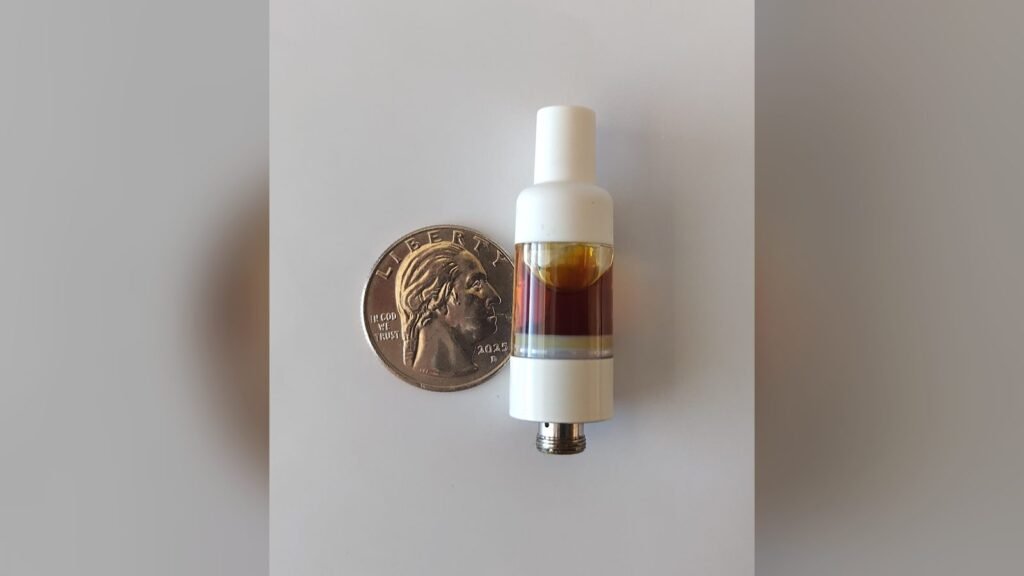
Liquid diamonds are a vape oil made from THCA crystals that have been heated into liquid form and blended with terpene-rich extract. They sit at the top of most brands’ cartridge ranges, above live resin and well above distillate, and the three are often sold side by side in the same 510-thread hardware.
The names sound like grades of the same thing. They are not. Each one describes a different way of separating cannabinoids and terpenes from the plant, and that changes what ends up in the cartridge. This guide explains how liquid diamonds, live resin and distillate are made, what the published research says about the differences, and what a label can and cannot tell you.
Important: This article is for general information only and is not legal or medical advice. Cannabis products are for adults 21 and over, and legality varies by state, so check local law first. Cannabis products have not been evaluated by the FDA and are not intended to diagnose, treat, cure or prevent any disease.
Key Takeaways
- Liquid diamonds: THCA crystals, activated with heat into THC, then mixed back with terpene-rich sauce. Usually the most potent and most expensive of the three.
- Live resin: a hydrocarbon extract of fresh-frozen plants that keeps cannabinoids and terpenes together in roughly the ratio the plant produced.
- Distillate: a refined oil with the terpenes stripped out, then flavored afterward. Cheapest per gram and the most consistent from batch to batch.
- Heat converts THCA cleanly: a 2016 study in Cannabis and Cannabinoid Research found THCA turns into THC with no side reactions and no CBN formed.
- Hardware matters too: a 2021 study of 13 legally sold Washington cartridges found chromium, copper and nickel from the metal parts in both the oil and the vapor.
What Are Liquid Diamonds?
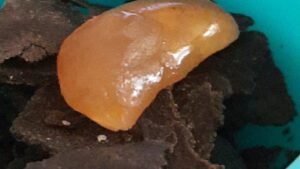
Start with the solid version. When a hydrocarbon extract such as live resin is left to rest, THCA, the non-intoxicating acid form of THC that the plant actually makes, slowly separates out and grows into clear crystals. Producers call them diamonds. The leftover liquid, which holds most of the terpenes, is called sauce or high-terpene extract.
Solid THCA diamonds do not work in a cartridge. They will not wick through a coil, and THCA has to be heated before it has the effects people associate with THC. So to make liquid diamonds, the producer heats the crystals until the THCA converts to THC and turns to oil, then stirs some of the sauce back in for flavor and aroma. The result is a thick, high-potency oil that can go into a vape.
There is no legal definition of the term. Some brands use “liquid diamonds” for a blend made entirely from one strain’s diamonds and sauce. Others use it for diamonds mixed with terpenes from another source. “Liquified diamonds,” “diamond carts” and “THC diamonds” are used just as loosely. The certificate of analysis is the only place the actual cannabinoid and terpene numbers appear.
What the heat step actually does
The conversion from THCA to THC is called decarboxylation, and it has been measured precisely. In a 2016 study in Cannabis and Cannabinoid Research, Wang and colleagues at the University of Mississippi’s National Center for Natural Products Research heated cannabis extracts in a vacuum oven at five temperatures between 80°C and 145°C for up to an hour.
THCA converted about twice as fast as the acid forms of CBD and CBG. The authors described the reaction as “essentially stoichiometric with no side reactions,” and no cannabinol (CBN) formed under their vacuum conditions. Their data did show a small overall loss, about 8 percent of the combined THCA and THC at 110°C. For liquid diamonds, that means a carefully heated batch keeps most of its potential THC. Because THC is a lighter molecule than THCA, the weight percentage drops somewhat on conversion, which is why a lab report for an activated product reads differently from a raw diamond’s.
How Live Resin Compares
Live resin is the starting point for most liquid diamonds. Fresh-frozen plants are washed with chilled butane or propane in a closed-loop system, and the solvent is then purged out. Because nothing is separated afterward, live resin keeps cannabinoids and terpenes together in roughly the balance the plant produced, which is why it is prized for flavor.
The trade-off is potency. With terpenes making up a meaningful share of the oil, live resin usually tests lower in THC than liquid diamonds from the same material. We covered how live resin is made, and how it differs from solventless live rosin, in our earlier guide to live rosin vs live resin.
How Distillate Is Made
Distillate goes the other way. Cannabis or hemp is first extracted, often from dried material with ethanol, CO2 or a hydrocarbon. The crude oil is winterized to remove fats and waxes, heated to convert THCA to THC, and then run through a short-path or wiped-film still under deep vacuum. Each compound boils off at its own temperature, so the operator can collect a narrow cannabinoid fraction and leave the rest behind.
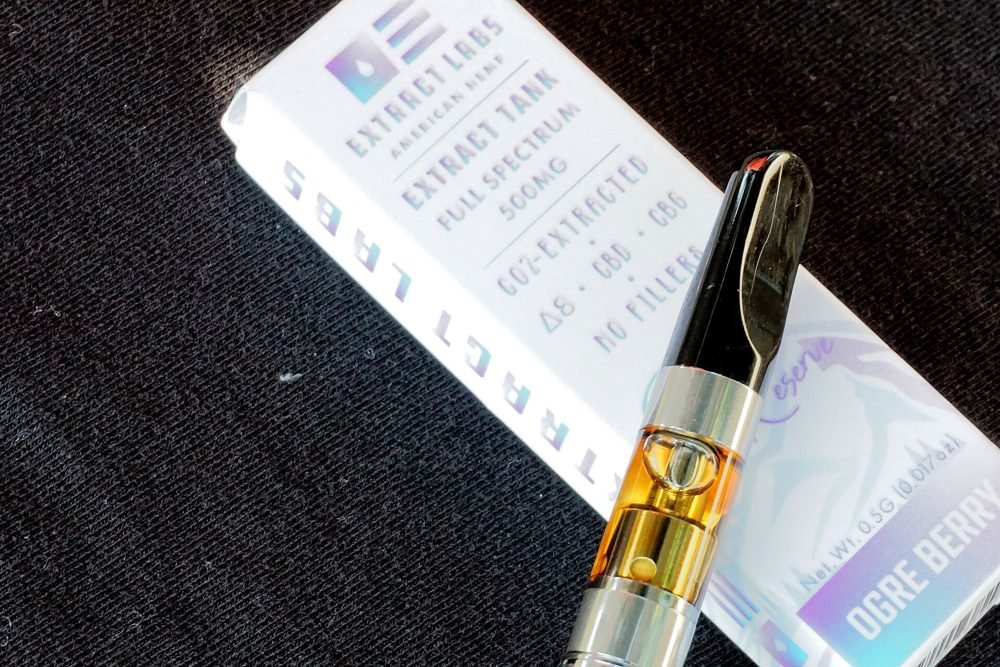
The finished oil is clear to pale gold, very potent and almost flavorless, because the terpenes were removed with everything else. Producers then add terpenes back. Those can be cannabis-derived, botanical terpenes from plants such as citrus or pine, or flavor blends, and the label does not always say which. That is why distillate carts can come in dessert and candy flavors that no cannabis strain produces.
Distillate’s advantages are cost and consistency. It can be made from dried trim rather than fresh-frozen flower, and every batch can be refined to the same potency. Its weakness is that the plant’s original terpene profile is gone.
Liquid Diamonds vs Live Resin vs Distillate at a Glance
| Liquid diamonds | Live resin | Distillate | |
|---|---|---|---|
| Starting material | Usually fresh-frozen plants | Fresh-frozen plants | Often dried flower or trim |
| Process | Hydrocarbon extract, THCA crystallized out, heated, sauce added back | Hydrocarbon extract, purged | Extracted, winterized, decarboxylated, vacuum distilled |
| Terpenes | From the sauce; amount varies by brand | The plant’s own, largely intact | Removed, then added back |
| Typical potency | Highest | Moderate to high | High |
| Flavor | Strain-specific if made from one batch | Strongest strain character | Depends on the added terpenes |
| Price | Premium | Mid to premium | Lowest |
None of these is the “best” by default. A shopper who wants the most THC per puff tends to choose liquid diamonds. Someone who cares most about tasting a specific strain usually prefers live resin. Distillate suits people who want a predictable, affordable cart and do not mind added flavor.
What the Research Says About Terpenes
The main argument for liquid diamonds and live resin over distillate is the “entourage effect,” the idea that terpenes and minor cannabinoids change how THC feels. The evidence on that is split, and two well-known studies point in different directions.
In 2019, researchers at Macquarie University and the University of Sydney published “Absence of Entourage” in Cannabis and Cannabinoid Research. They tested six common cannabis terpenes, including myrcene, limonene, linalool and beta-caryophyllene, on cells carrying human CB1 and CB2 receptors. None of the terpenes activated the receptors on their own, and none changed how THC acted on them. The authors concluded that if an entourage effect exists, it does not work at those receptors.
Two years later, a University of Arizona team led by John Streicher reported the opposite in Scientific Reports. In their experiments, the terpenes alpha-humulene, geraniol, linalool and beta-pinene produced cannabinoid-like behavior in mice, and the effect added to that of a synthetic cannabinoid. The two studies used different methods and mostly different terpenes, so they do not cancel each other out.
What that means for shoppers is limited. Terpenes clearly drive flavor and aroma, and many consumers report that strain-specific oils feel different. Whether a terpene-rich cart produces a measurably different high than terpene-free distillate at the same THC dose has not been settled in humans.
What the Research Says About Cartridge Hardware
The oil is only half of a vape. A cartridge heats it with a metal coil, and the metal can end up in what you inhale.
In 2021, Chantel McDaniel, Sai Mallampati and Amber Wise of Medicine Creek Analytics, a licensed testing lab in Washington state, published a study in Chemical Research in Toxicology on 13 cannabis cartridges bought legally in Washington. As NORML summarized, they found chromium, copper and nickel in both the oil and the vapor, with smaller amounts of lead, manganese and tin. The same oils heated without a cartridge did not show the same metals, which pointed to the hardware as the source.
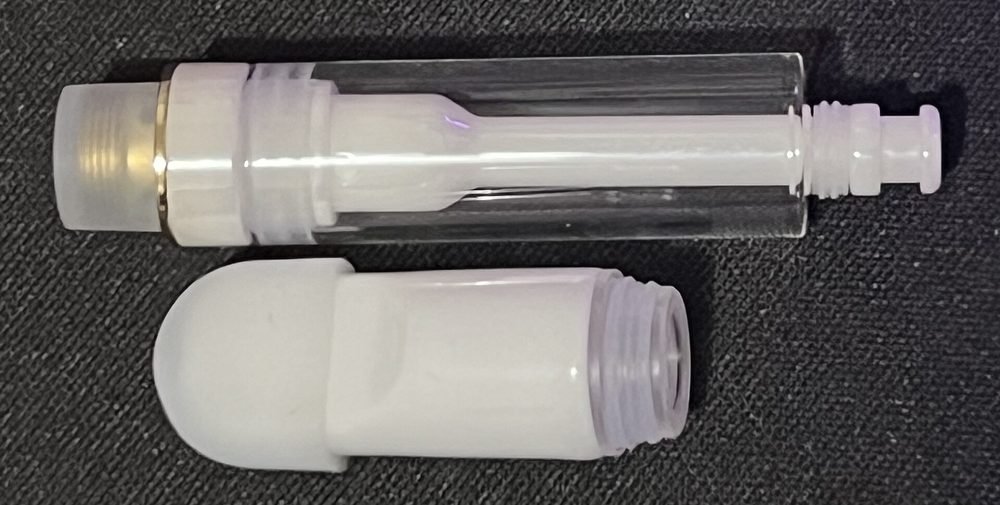
A 2025 scoping review pulled together nine studies published through February 2024. It found that metal leaching depended on the condition of the device, its age, the operating temperature, the oil’s pH and the cutting agents used to change its thickness. None of the nine studies measured health outcomes in people, so the review could not say what exposure levels mean for users.
Two practical points follow. Thick oils such as liquid diamonds and live resin need hardware built to heat them evenly, and running any cart at a high voltage raises coil temperature. We also covered the separate research on terpene breakdown at high heat, and the CDC findings on vitamin E acetate, in the research section of our rosin guide.
What the Label Does and Does Not Tell You
Words like “diamond,” “liquid diamond,” “gold” and “premium” are product names, not regulated grades. Many brands sell the same 1-gram 510 cartridge in several lines with different names and flavors. The Mad Labs cart range is one example: it is split into a Gold Edition line and a Liquified Diamonds line, in the same hardware at the same fill. As we note on that page, the line name on its own does not tell you how either oil was extracted.
These checks tell you more than the name does:
- A batch-matched COA: the certificate of analysis should carry the same batch or lot number as the package and come from an accredited third-party lab.
- Total THC and THCA listed separately: an activated cart should show mostly THC. A large THCA figure in a cart suggests it was not fully decarboxylated.
- Terpene results: a liquid diamond or live resin cart that claims strain-specific flavor should show measurable terpenes, often listed as a total percentage.
- Residual solvents and heavy metals: any hydrocarbon-derived oil should pass a solvent panel, and a full panel should include metals.
- Ingredient list: “cannabis-derived terpenes” and “botanical terpenes” are different things. Thinning agents should not be in the oil at all.
Using Thick Oils in a 510 Cartridge
Liquid diamonds are among the thickest oils sold in carts, and thick oils are the usual reason a cart stops hitting. A few habits help:
- Start low on voltage: many cartridge makers suggest the lower settings, roughly 2.5 to 3.3 volts on adjustable batteries, then raising it only if the vapor is thin.
- Warm it, do not burn it: in a cold room, use the battery’s preheat setting or hold the cart in your hand for a minute so the oil can reach the coil.
- Clear a clog gently: if the airway is blocked, a short preheat followed by a light draw without firing usually clears it.
- Store it upright: keep carts mouthpiece up, out of direct sun and out of hot cars.
THCA Diamonds and the Federal Hemp Change
Many THCA diamonds and liquid diamond carts sold online are marketed as hemp products, relying on the 2018 Farm Bill definition, which counted only delta-9 THC. That definition is being replaced. Under P.L. 119-37, signed on November 12, 2025, hemp will be measured by total THC including THCA, and final products containing more than 0.4 milligrams of THC per container will no longer qualify as hemp.
A September 2, 2026 law (P.L. 119-103) pushed most of that change to December 11, 2026, according to the Congressional Research Service. A one-gram THCA cart is far over a 0.4 milligram limit, so products sold under the hemp definition are directly affected. Cannabis products sold through state-licensed markets remain governed by state law. Bills to delay or revise the change are pending, so check current rules before relying on any date. This is not legal advice.
Frequently Asked Questions
What are liquid diamonds?
Liquid diamonds are THCA crystals that have been heated so the THCA converts to THC and becomes oil, then blended with terpene-rich sauce so the result can be vaped from a cartridge.
Are liquid diamonds stronger than live resin?
Usually, yes. Liquid diamonds are mostly isolated cannabinoid with a smaller terpene fraction, while live resin keeps more of the plant’s terpenes, so liquid diamonds tend to test higher in THC. Check the COA for the actual numbers on any batch.
What is the difference between liquid diamonds and distillate?
Both are high-potency oils, but they are made differently. Liquid diamonds are crystallized out of an extract and keep terpenes from the same source. Distillate is refined by vacuum distillation, which removes the original terpenes, and flavor is added back afterward.
Distillate vs live resin: which is better?
It depends on what you want. Live resin keeps more of the plant’s original flavor and costs more. Distillate is cheaper and more consistent, with flavor that comes from added terpenes. Published research has not shown that one produces a different effect at the same THC dose.
Why is my liquid diamond cart not hitting?
Thick oil is the usual cause, especially in cold weather. Warm the cart with a preheat cycle or in your hand, take slow draws, and make sure the battery is charged and the connection is clean. If oil has blocked the mouthpiece, a light draw without firing often clears it.
Are THCA diamonds legal?
It depends on where you are and how the product is sold. Under the federal law as written, hemp will be measured by total THC including THCA from December 11, 2026, which removes most THCA products from the hemp definition. State-licensed cannabis products follow state law.
Featured image: UnifiedFunctionality, CC BY-SA 4.0, extended to a wide format.