Is DMT Legal? Federal Law, State Exceptions and What the Research Shows
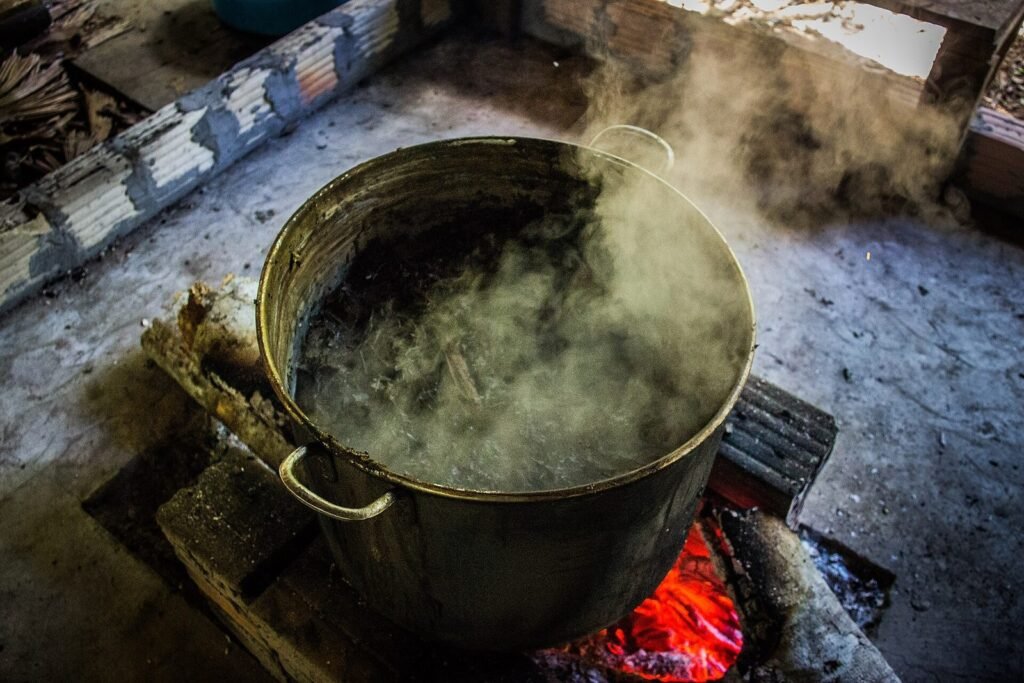
DMT is not legal in the United States under federal law. N,N-dimethyltryptamine has been a Schedule I controlled substance since Congress passed the Controlled Substances Act in 1970, which makes it illegal to make, sell or possess outside of approved research.
There are narrow exceptions, though, and they have widened over the past 20 years. Two churches won the right to use DMT-containing ayahuasca tea in religious ceremonies. Colorado voters decriminalized personal use of plant-derived DMT in 2022. And in February 2026, a placebo-controlled trial of DMT for depression was published in Nature Medicine. This guide explains where DMT is legal, where it is not, and what the research shows.
Important: This article is for general information only and is not legal or medical advice. Drug laws change and vary by state and city, so check the current law where you live. DMT is a powerful psychedelic with real psychological and physical risks, and no DMT product has been approved by the FDA for any use.
Key Takeaways
- Federal law: DMT and the related 5-MeO-DMT are Schedule I drugs, defined as having a high potential for abuse and no accepted medical use.
- Religious use: the Supreme Court ruled unanimously in 2006 that a church could import and use ayahuasca tea under the Religious Freedom Restoration Act.
- Colorado: adults 21 and over may possess, grow and share plant-derived DMT for personal use without payment, but selling it remains illegal.
- Oregon rolled back: the state restored criminal penalties for drug possession on September 1, 2024, ending Measure 110’s decriminalization.
- Research: a 34-patient Imperial College London trial found a single intravenous DMT dose reduced depression scores more than placebo, with effects lasting up to six months in some patients.
What DMT Is and Where It Comes From
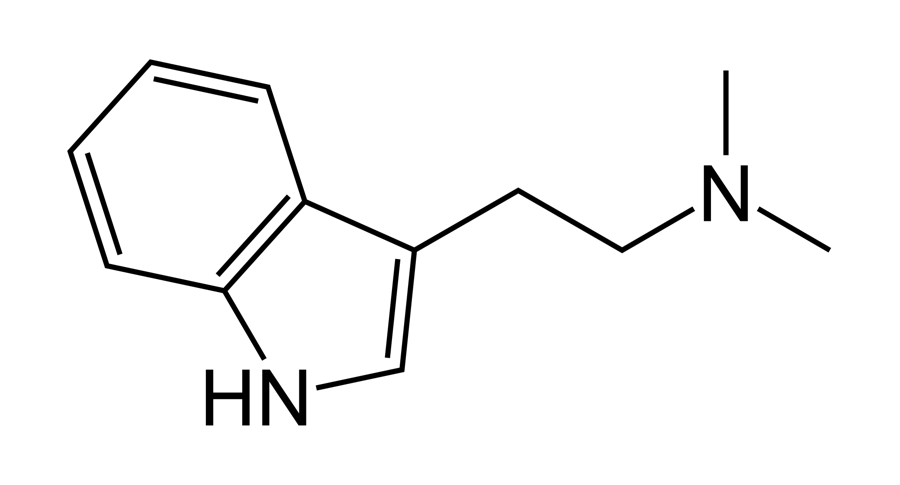
DMT is a tryptamine, a close chemical relative of serotonin and of psilocin, the active compound in psilocybin mushrooms. When smoked, vaporized or injected, it produces an intense psychedelic experience that typically lasts well under an hour. Taken by mouth on its own, it does almost nothing, because an enzyme in the gut called monoamine oxidase breaks it down before it reaches the brain.
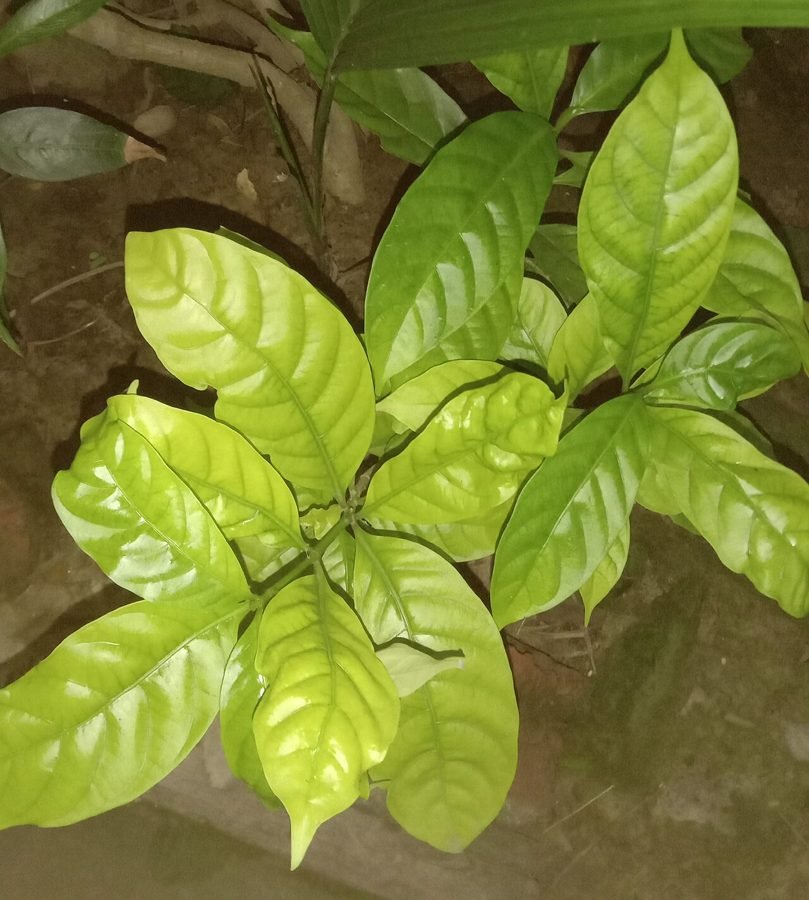
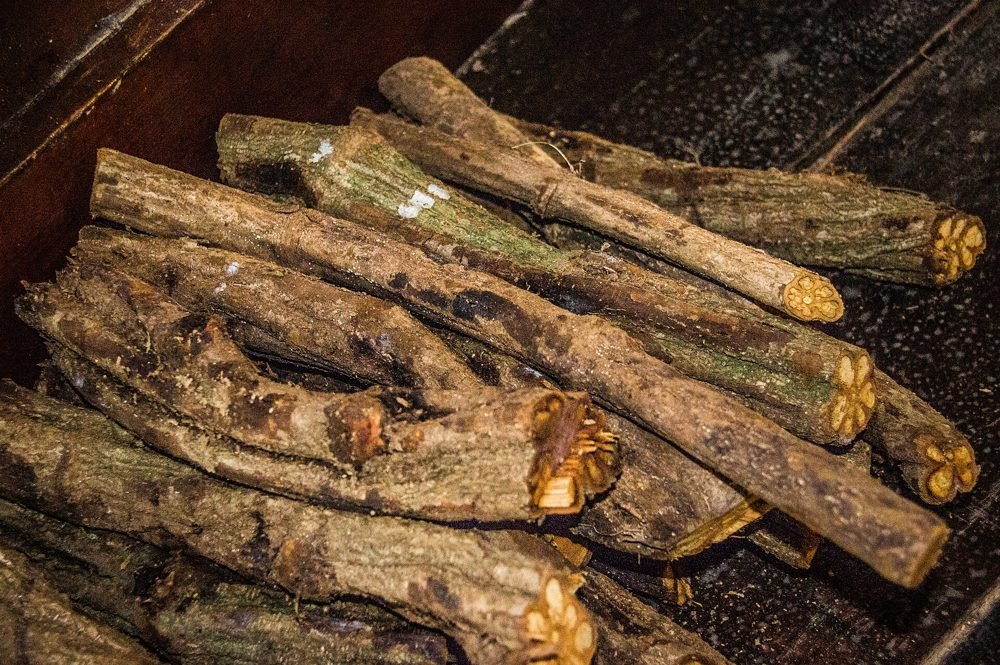
The compound occurs naturally in many plants. The best known is Psychotria viridis, a shrub from the Amazon basin known locally as chacruna. Its leaves are one of the two traditional ingredients in ayahuasca. The other is the Banisteriopsis caapi vine, which contains compounds that block monoamine oxidase and so allow the DMT in the tea to take effect when swallowed.
Is DMT made in the human brain?
Popular accounts often say DMT is produced by the pineal gland. The evidence for that is weak. In 2019, a University of Michigan team led by Jimo Borjigin published a study in Scientific Reports that found neurons able to make DMT in several regions of the rat brain, including the neocortex and hippocampus. DMT was still produced when the pineal gland was removed.
The study’s claim that DMT exists at levels similar to other brain chemicals was disputed in a 2020 appraisal by pharmacologists Charles Nichols and David Nichols. Borjigin herself said the role of DMT in the brain is still unknown. “We don’t know what it’s doing in the brain,” she told Neuroscience News. The work was done in rats, not people.
Federal Law: Schedule I
Under the Controlled Substances Act, Schedule I is reserved for drugs that, in the statute’s words, have “a high potential for abuse,” “no currently accepted medical use in treatment in the United States,” and “a lack of accepted safety for use” under medical supervision. DMT has been on that list since the law’s beginning. So have LSD, psilocybin and heroin.
A few points follow from that:
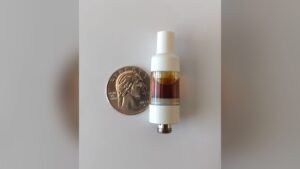
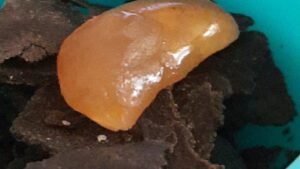
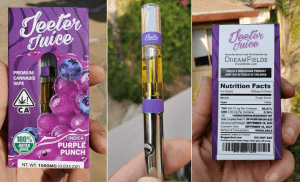
- Every form is covered: the scheduling applies to DMT whether it is a crystal, dissolved in a liquid, brewed into tea or sold in a vape cartridge. Online listings for DMT vape cartridges do not change its federal status.
- Related compounds: 5-MeO-DMT, a different and more potent tryptamine found in some plants and in the secretion of the Sonoran Desert toad, was placed in Schedule I in 2011. Other synthetic variants that are not named in the schedules, such as 4-AcO-DMT, can still be prosecuted under the Federal Analogue Act if sold for human consumption.
- Research is allowed with a license: scientists can study DMT with a Schedule I registration from the Drug Enforcement Administration, which is how every U.S. clinical study has been run.
The Religious Exceptions: Ayahuasca Churches
The biggest legal exception to the DMT ban came from the Supreme Court. In Gonzales v. O Centro Espírita Beneficente União do Vegetal (2006), a small New Mexico branch of a Brazilian church challenged the government’s seizure of hoasca, its sacramental ayahuasca tea, which contains DMT.
The church sued under the Religious Freedom Restoration Act of 1993, which bars the federal government from substantially burdening religious practice unless it proves a compelling interest pursued by the least restrictive means. The government argued that its interests in health, preventing diversion and honoring a 1971 UN drug treaty were enough. The Court disagreed unanimously, in an opinion by Chief Justice John Roberts, and upheld an injunction letting the church continue its ceremonies.
In 2009, a federal district court in Oregon reached a similar result for the Santo Daime church in Church of the Holy Light of the Queen v. Mukasey. The DEA now accepts petitions for religious exemptions under the same law.
These rulings are narrow. They protect specific congregations using a specific sacrament in ceremony. They do not legalize ayahuasca retreats in general, and they do not cover DMT sold as a powder, liquid or vape product.
State and City Laws
States cannot override federal law, but they can decide how their own police and courts treat DMT. As of October 2026, only one state has made a meaningful change.
Colorado
Colorado voters approved Proposition 122, the Natural Medicine Health Act, in November 2022, and the legislature filled in the details with SB23-290 in 2023. According to an analysis in Colorado Lawyer, the law decriminalizes the cultivation, possession, consumption and sharing of “natural medicine” in personal-use amounts for adults 21 and over, as long as no money or other consideration changes hands. DMT is on the list.
The law has limits that matter. It covers DMT derived from a plant, not synthesized in a lab. Sales remain illegal outside the state’s licensed healing center program, and that program started with psilocybin only. DMT became eligible to be added on or after June 1, 2026, but only if the state’s advisory board recommends it and regulators approve. We could not find a record of that happening as of October 2026, so check the Colorado Natural Medicine Division for current status.
Oregon
Oregon’s Measure 110, passed in 2020, made possession of small amounts of all drugs, including DMT, a civil violation rather than a crime. The legislature reversed most of that in 2024. Under HB 4002, possession of small amounts became a misdemeanor again on September 1, 2024. Oregon’s regulated psilocybin program does not include DMT.
California and city measures
In California, DMT remains illegal statewide. The legislature passed SB 58 in 2023, which would have decriminalized personal possession of several plant-based psychedelics including DMT, but Governor Gavin Newsom vetoed it. Several cities, starting with Oakland in 2019 and including Santa Cruz, have passed resolutions making enforcement against entheogenic plants a low priority. Those resolutions do not make the plants legal, and they do not bind state or federal authorities.
What the Clinical Research Shows
Modern human research on DMT in the U.S. began with psychiatrist Rick Strassman, who gave intravenous DMT to about 60 volunteers at the University of New Mexico between 1990 and 1995. It was the first new U.S. study of a psychedelic in humans in roughly two decades, and it documented the drug’s rapid onset, short duration and sharp increases in heart rate and blood pressure.
The most significant result since then was published in February 2026. In a phase 2a trial reported in Nature Medicine, researchers at Imperial College London randomly assigned 34 adults with moderate to severe depression, each of whom had already tried at least two treatments, to a single 21.5 mg intravenous dose of DMT or a placebo, alongside psychological support.
According to Imperial College London, the DMT group’s depression scores on the MADRS scale fell 7.4 points more than the placebo group’s at two weeks. The effects were still present at three months and lasted up to six months in some patients. No serious treatment-related adverse events were reported. “We have shown that a single DMT experience of just around 25 minutes duration is safe, effective and durable,” lead author David Erritzoe said.
The trial was designed, funded and sponsored by Cybin UK, formerly Small Pharma, which supplied the drug. Independent experts quoted by the Science Media Centre pointed to the small sample and to a problem shared by all psychedelic trials: participants can usually tell whether they received the active drug, which makes expectation hard to separate from effect. The authors also called for larger and longer studies.
That is where the research stands. DMT therapy is being tested, but it is not an approved treatment, and the trial doses were given intravenously by clinical staff, with screening and psychological support. They do not translate to products bought outside that setting. Several companies are also running trials of 5-MeO-DMT, a related compound, for depression.
Health Risks the Law Is Responding To
Federal scheduling rests partly on safety, and the clinical literature identifies real risks:
- Cardiovascular strain: Strassman’s studies recorded dose-related rises in heart rate and blood pressure, which is why clinical trials screen out people with heart conditions.
- Drug interactions: ayahuasca contains a monoamine oxidase inhibitor, and combining it with SSRI antidepressants or other serotonergic drugs carries a risk of serotonin syndrome.
- Psychological risk: trials exclude people with a personal or family history of psychosis, because intense psychedelic experiences can trigger or worsen it.
- Unknown contents: DMT products sold outside research and church settings are unregulated. There is no required lab testing, so the dose and purity on a label cannot be checked.
Duration is another common question. We cover how long effects last for smoked, vaporized and brewed forms in our guide to how long DMT lasts.
Frequently Asked Questions
Is DMT legal in the US?
No. DMT is a Schedule I controlled substance under federal law. The exceptions are DEA-licensed research and religious ayahuasca use by congregations protected under the Religious Freedom Restoration Act.
Is ayahuasca legal?
Not generally. Because ayahuasca contains DMT, it falls under the same federal ban. The União do Vegetal and Santo Daime churches have won court protection for ceremonial use, and Colorado allows personal use of plant-based natural medicine without payment.
Is DMT legal in Colorado?
Personal use of plant-derived DMT by adults 21 and over is decriminalized in Colorado, including growing and sharing it without payment. Selling it is still illegal, synthetic DMT is not covered, and DMT is not yet part of the state’s licensed healing center program as far as we could find.
Is 5-MeO-DMT legal?
No. 5-MeO-DMT has been a federal Schedule I substance since 2011. It is a different compound from N,N-DMT and is considerably more potent by weight.
Is DMT used in therapy?
Only in clinical trials. A 2026 phase 2a trial found a single intravenous dose reduced depression symptoms more than placebo, but DMT is not an approved treatment and larger trials are still needed.
Does the pineal gland make DMT?
There is no good evidence that it does in humans. A 2019 study found DMT-producing neurons in the rat brain that kept working after the pineal gland was removed, and researchers still do not know what role, if any, DMT plays in the brain.